


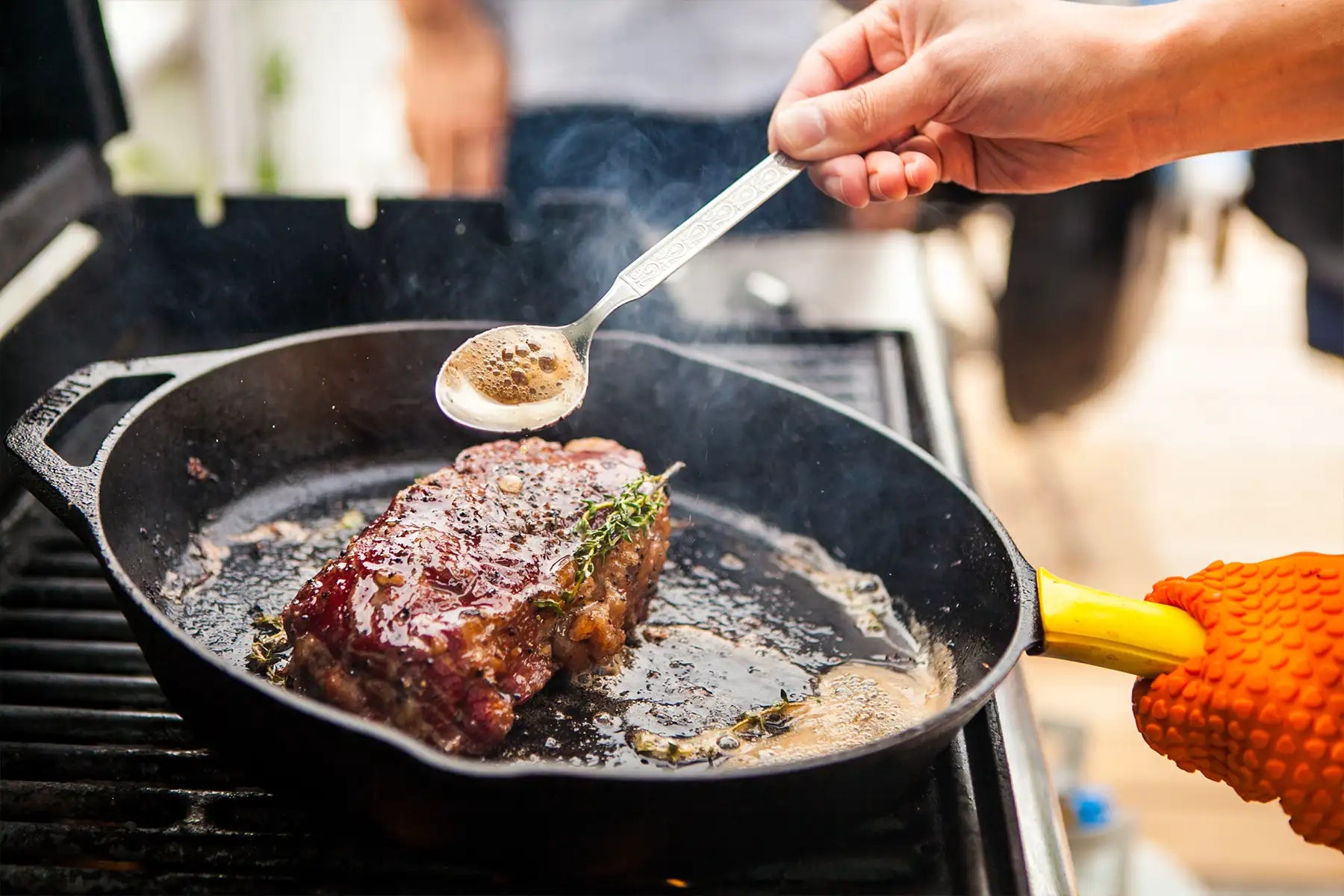
The cold chain in meat delivery: how meat stays fresh in transit
For many people, ordering meat online is the last step that still takes some effort. The question behind it is almost always the same: what happens to the meat between packing and front door? The answer lies in the cold chain, and it can be explained plainly.
What the cold chain in meat delivery actually means
Cold chain means the meat stays cold continuously, from processing right through to handover. No interruption, no interim storage at room temperature, no hours in a warm vehicle. Fresh meat reacts sensitively to heat. If the temperature rises, bacteria multiply faster and shelf life drops. That is not a detail for specialists but the reason a parcel of meat has to be built differently from a parcel of books.
The difference from the supermarket is obvious. There the goods sit in a chilled counter, before that they lay in cold storage and arrived in a refrigerated truck. In shipping there is no such continuous chain of somebody else's equipment. The cooling therefore has to travel inside the parcel.
Insulated packaging and cool packs instead of a refrigerated truck
We vacuum seal every cut individually. The vacuum keeps oxygen out, prevents drying and protects against foreign odours. The goods then go into insulated packaging with cool packs. The insulation keeps the cold inside the box, the packs release it over the shipping period.
What matters is the combination. Cool packs in an ordinary box lose their effect quickly because the cold escapes outwards. Good insulation without a coolant achieves just as little in reverse, it only holds the temperature that is already there. Only both together make packaging that carries a shipping day.
Fresh chilled is not the same as deep frozen
The two are often lumped together but they require different packaging. Frozen goods have to stay permanently well below freezing, which calls for different coolants and a different calculation. We ship fresh chilled because we process to demand and the goods therefore do not need to be storable for months. The difference shows up later on the plate: what has never been frozen loses no juice when defrosting. The price for that is a tight schedule.
Time is the factor you see least
Every chilled package has a limited running time. The shorter the parcel is in transit, the bigger the buffer. That is why we ship by express, with delivery usually within 24 hours of dispatch.
The weekly sequence behind it is fixed. Orders placed by Sunday 23:59 go into the following week. Monday the order is placed, Tuesday processing, Wednesday chilled packing and dispatch, Thursday delivery. That is not an arbitrary plan but the reason only a few days lie between processing and front door. Around public holidays the sequence can shift, and we say so in advance. The details are on the shipping and delivery page.
How to tell on arrival that everything went right
A few things you can check yourself, without any measuring device:
- The box feels noticeably cool inside and the cool packs are still cold.
- The vacuum bags sit tight against the meat and have not opened anywhere.
- The meat is firm, not slimy, and smells neutral.
If any of that is off, contact us with photos before using the meat. We settle such cases directly and without detours.
The last metre counts just as much
The cold chain does not end with delivery but in your fridge. It therefore makes sense to choose a delivery address where somebody is there on Thursday, or a drop off spot in the shade. Unpack the goods promptly and put them on the bottom shelf, where it is coldest. Whatever you do not need in the next few days is best moved straight to the freezer. How long each cut keeps is covered in storing meat properly.
In the end the cold chain is not a promise but a chain of decisions: process to demand, pack correctly, ship fast, put away promptly. If you want to see what arrives at unpacking, the easiest start is a single cut, a rump steak for instance.
Read more
A seal on the pack says less than many assume. What a halal certificate confirms, where interpretations differ and how to recognise solid proof.
Defrost meat the wrong way and you lose juice, texture and taste. Why the fridge is the best choice, how long to allow and which shortcut is worth taking.