


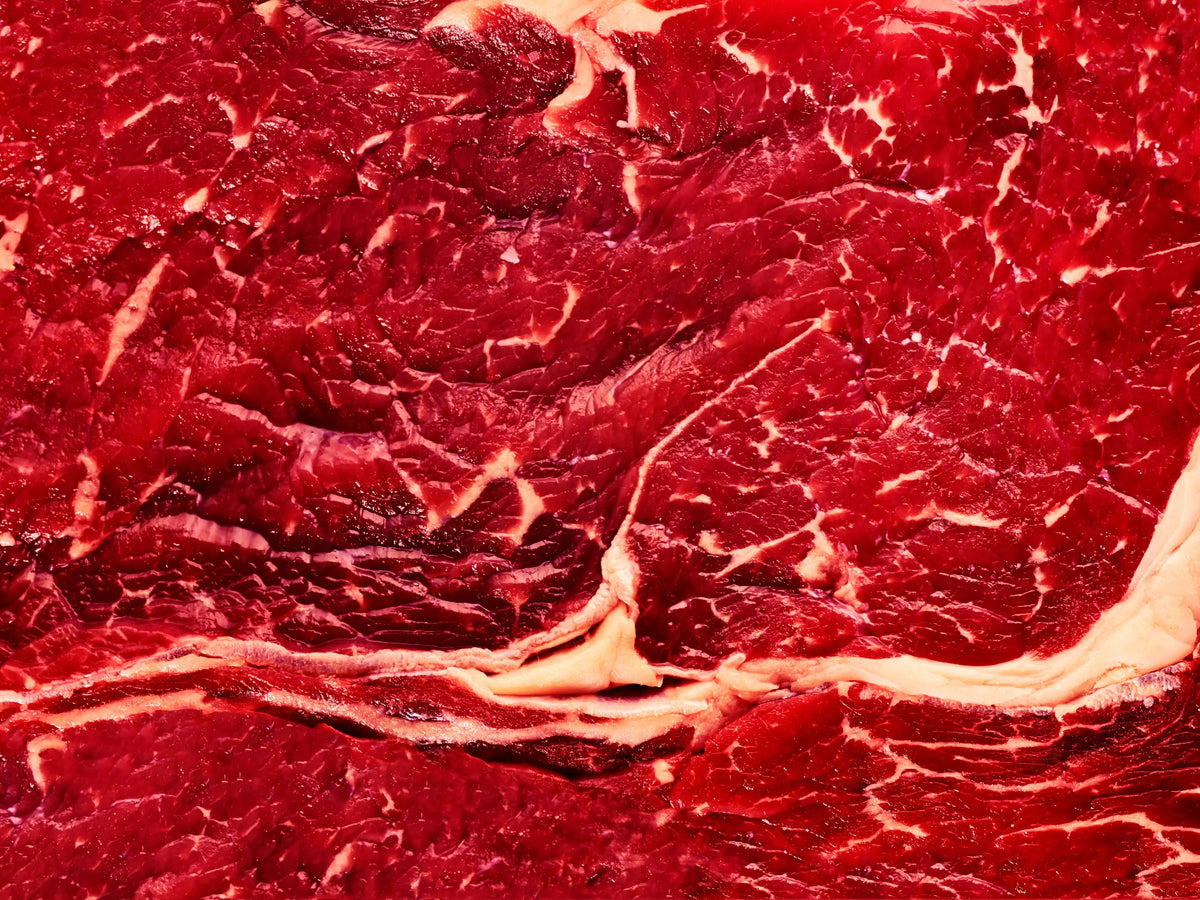
Sucuk quality: how to recognise a good sausage
Sucuk looks much the same in almost every pack. A dark red ring, firmly filled, strong on garlic. Only in the pan does it become clear how far the differences go: one slice releases its own fat and stays firm, another sits in liquid and falls apart. Sucuk quality is not something you read off the packaging. You read it off the ingredient list, the cut surface and the behaviour in the pan.
Sucuk quality starts with the meat
On every label, ingredients are listed in order of quantity. Meat therefore belongs in first place, and the species has to be named. If the label only refers to meat in general, or mixes several species, it is worth a second look. Fat is not a flaw here. It carries seasoning and juiciness. It should be visible as fine marbling, not as a solid layer along the edge. The grain is worth a look too: a clearly minced mixture with visible structure points to proper craft, while a completely smooth, paste like mass points to heavily processed raw material.
A short ingredient list and real spices
Traditionally this sausage needs very little: meat, salt, garlic, cumin, paprika and time. The longer the list, the more is replacing what curing would otherwise do. Flavourings, flavour enhancers and stabilisers are signs that the sausage had to be finished quickly. Smoke flavouring is a signal of its own, because smoking happens over wood rather than in the ingredient list. The wording on the front of the pack tells you less than the small print on the back.
The cut surface shows the curing
A properly cured sausage is firm, cuts into clean slices and shows clearly visible marbling. The cut surface looks matt and dry. If the sausage is soft, almost rubbery, or sits wet in the packaging, the curing time was short. Smell is the second checkpoint: spicy and clearly garlicky, without a sour or sharp note. The casing should sit tight against the sausage. If it comes away in folds, the sausage dried out heavily after curing or spent a long time in transit.
The pan settles the rest
Good sucuk needs no extra oil. Over medium heat it releases its own fat, browns at the edges and holds its shape. If water comes out instead and the slices shrink noticeably, there was a lot of liquid in the mixture. If you put it on the grill whole, score it lengthways first so the heat reaches the centre evenly. Leftovers work well with eggs, in beans or on bread. Once opened, the sausage belongs in the fridge, ideally wrapped in paper rather than sealed airtight, so the cut surface can keep breathing.
Why origin matters especially here
With processed products, origin is harder to trace than with a single cut, because more stages sit in between. That makes it matter all the more who stands behind it. Our range comes from Austria, and halal is not an added option at Reinweide but the basis for everything we carry. Shipping is chilled and follows a fixed weekly rhythm: orders close on Sunday at 23:59, packing and dispatch happen on Wednesday, delivery is scheduled for Thursday. That keeps the goods briefly in transit and they arrive in the condition in which they left us.
What decides it in the end
Three checks are usually enough: read the ingredient list from top to bottom, look at the cut surface, fry the first slice without oil. Whatever stays firm, releases its own fat and smells of spice rather than flavouring is a sausage someone took time over.
With a cheese filled sausage, heat control decides whether the cheese stays inside. How that works in the pan, in the oven and on the grill is covered in the article cooking Käsekrainer.
If you would like to check that against an example: our range includes the Törkenwurst, distinctly seasoned and lightly smoky, made for the pan and the grill. The other varieties can be found under sausage specialities.
Read more
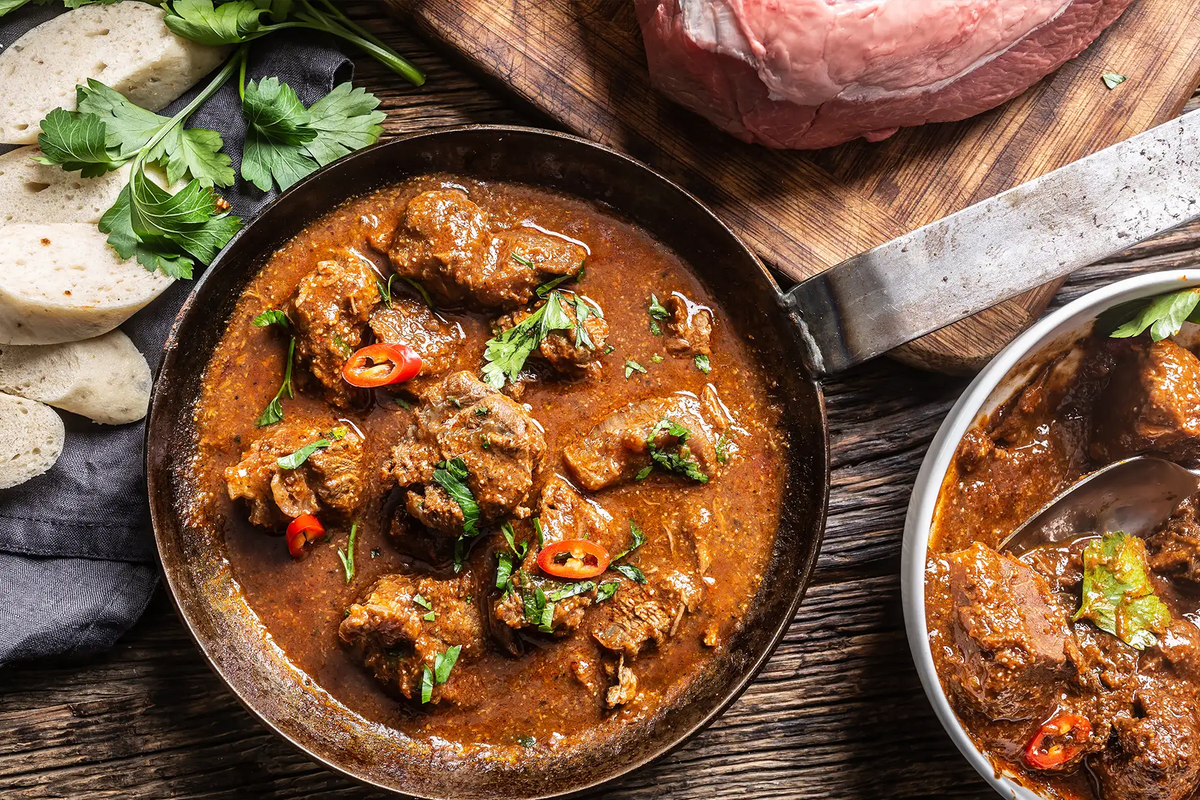
Meat from Austria means one fixed origin instead of changing sources, short distances to dispatch and halal across the whole range. What that means in practice.
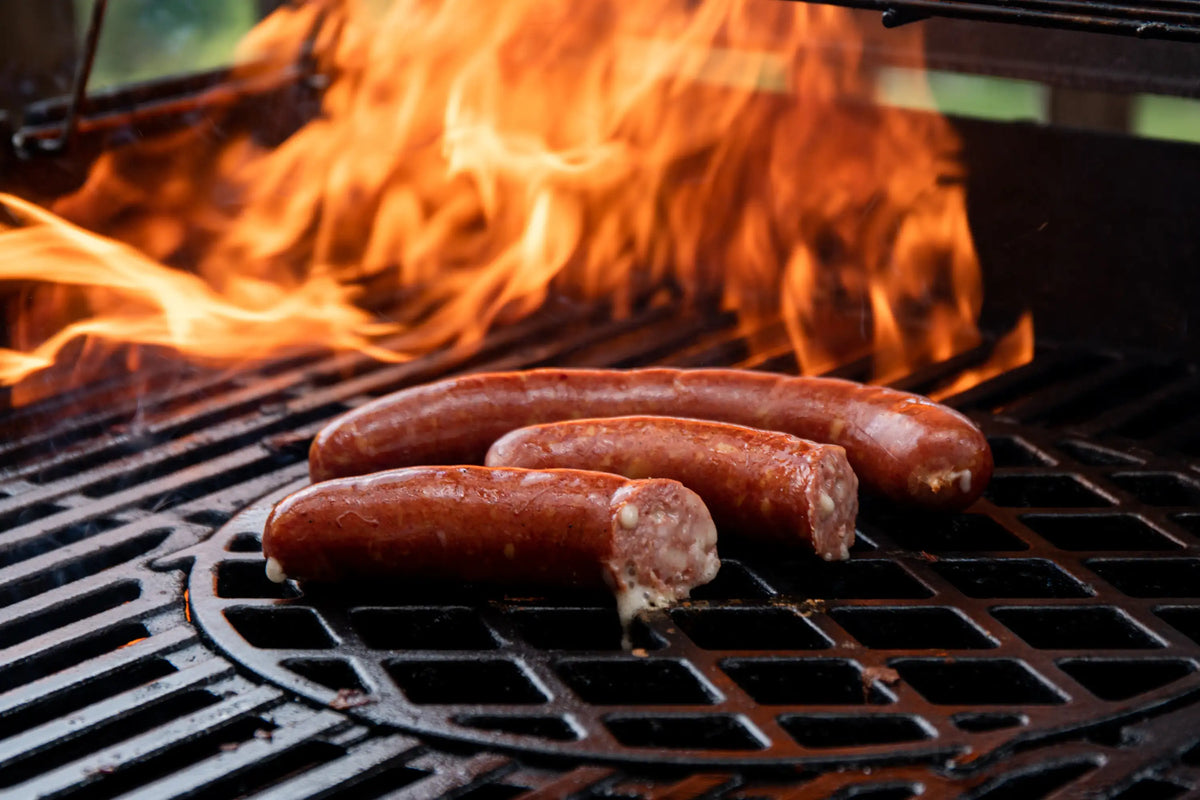
Pan, oven or grill: how Käsekrainer heat through evenly and the cheese stays where it belongs.